Dyson Sphere: Humanity’s Bold Plan to Harness the Power of a Star
Every second, the Sun emits more energy than all of humanity has used in its entire history. But what if we could capture that?
As humanity's energy demands skyrocket for our growing civilization, space exploration, and advanced technologies like AI, we'll need sources far beyond what Earth can provide. This urgent need drives one of humanity's most audacious visions: the **Dyson Sphere** — a theoretical megastructure that could fully surround a star and collect its immense energy output. First proposed by physicist Freeman Dyson in 1960, this idea could redefine energy, civilization, and even humanity's destiny. For more on cosmic phenomena, explore our article on White Holes, the universe's powerful counterparts.
What Exactly Is a Dyson Sphere?
It’s not one giant metal shell — that’s pure science fiction, fraught with impossible engineering challenges and catastrophic instability. Instead, Dyson imagined a **Dyson Swarm**: a vast, decentralized collection of billions of individual solar collectors, habitats, and industrial complexes, all independently orbiting a star. These elements would harvest solar energy and beam it back to Earth, other colonies, or use it directly in space.
Why It Matters: The Kardashev Scale
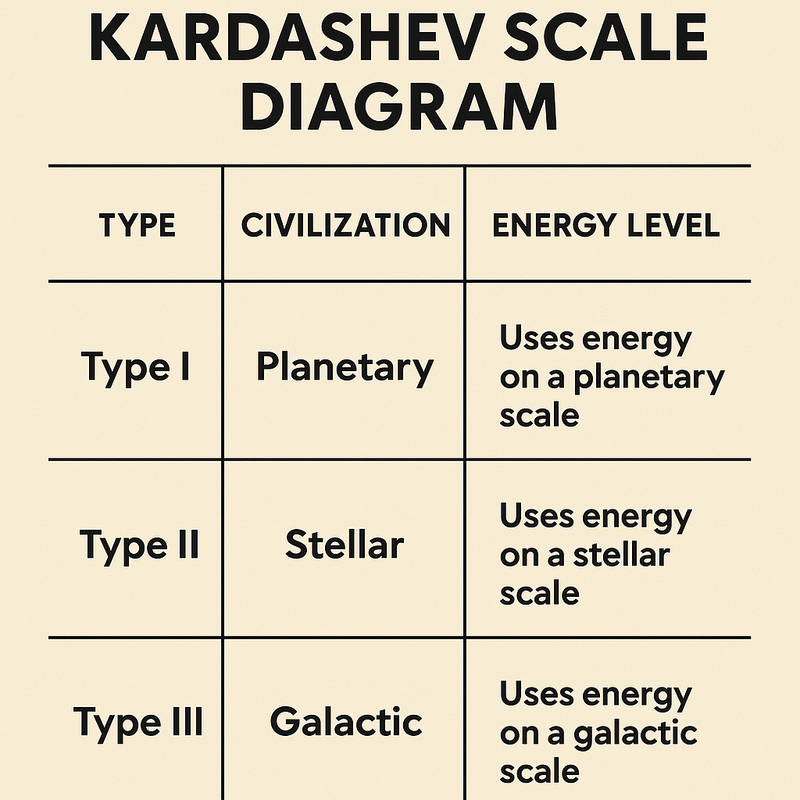
The sheer scale of a Dyson Sphere concept elevates humanity to a new cosmic tier. Physicist Nikolai Kardashev classified civilizations by their energy usage:
| Type | Civilization Level | Energy Harnessed |
|---|---|---|
| I | Planetary | Earth’s full output (~10¹⁶ W) |
| II | Stellar | Star’s full output (~10²⁶ W) |
| III | Galactic | Energy from an entire galaxy |
A Dyson Sphere, by tapping into a star's full power, would signal a **Type II civilization** — a feat no species has yet achieved, marking a profound leap in technological and societal evolution.
Designs: Not Just One Shape
While the "Dyson Sphere" conjures images of a solid shell, Dyson himself envisioned more practical designs. Scientists and futurists have since explored several models:

| Model | Description | Feasibility |
|---|---|---|
| **Dyson Shell** | A solid, rigid sphere completely enclosing a star | Impractical (requires impossible material strength, unstable orbit, immense waste heat trapping) |
| **Dyson Swarm** | Free-floating, independent solar collectors in orbit | Most Realistic (allows for dynamic adjustments, less material, manageable waste heat dispersion) |
| **Dyson Bubble** | Billions of light-pressure-balanced solar sails | Theoretical (highly challenging to maintain stability and precise positioning for billions of sails under continuous light pressure) |
Why Build a Dyson Sphere?
The motivations behind such a monumental undertaking are as vast as the energy it would capture:
- **Unlimited Clean Energy:** Imagine a future free from fossil fuels, nuclear waste, or atmospheric emissions. A Dyson Swarm would provide virtually inexhaustible, clean energy for millennia.
- **Powering AI, Space Habitats, and Future Cities:** The energy demands of advanced artificial intelligence, vast orbital colonies, interstellar travel, and sprawling future cities would be enormous. Only a star-sized power source could sustain such ambitions.
- **Global Energy Equality:** With energy scarcity eliminated, the potential for lifting billions out of energy poverty and fostering unprecedented global development is immense.
- **Enable Deep-Space Civilization Expansion:** Powering terraforming efforts on Mars, building self-sustaining lunar bases, or launching truly ambitious interstellar missions would become feasible with a stellar power source.
This isn’t just an energy project — it’s a civilization-scale transformation that redefines humanity's place in the cosmos.
Could We Actually Build One?
The concept of a Dyson Swarm, while technologically daunting, isn't considered to violate the laws of physics. However, the engineering challenges are on a truly cosmic scale:
- **Materials Acquisition:** We'd need to mine trillions of tons of material – likely from asteroids, Kuiper Belt objects, or even entire planets like Mercury – to construct the necessary collectors.
- **Autonomous Construction:** Billions of individual collectors would need to be built and deployed in orbit. This would necessitate highly advanced, self-replicating robots capable of mining, manufacturing, and assembling autonomously in space, all while navigating the complexities of orbital environments and managing space debris.

- **Advanced AI Management:** Orchestrating thousands of individual orbital paths and coordinating energy collection and transmission would require sophisticated AI far beyond current capabilities, perhaps even relying on a future quantum internet. Consider delving into AI's role in space exploration.
- **Wireless Energy Transmission:** Efficiently beaming vast amounts of energy back to Earth or other colonies across vast distances would require breakthroughs in focused energy transmission.
- **Waste Heat Management:** Even though a swarm can disperse heat better than a shell, harvesting stellar energy on such a scale would inevitably produce massive amounts of waste heat that needs to be radiated away, potentially altering the thermal signature of the star system itself.
Estimated timeline: Conservative estimates range from **500 to 1,000 years** of continuous technological advancement, economic stability, and unprecedented global cooperation.
What If Earth Had One Today? Imagine a World...
A fully operational Dyson Swarm would fundamentally reshape our existence:
- **Virtually free energy worldwide:** The energy crisis would be a relic of the past, making power universally accessible.
- **Space-powered industries on the Moon or Mars:** Energy-intensive manufacturing could move off Earth, allowing for cleaner terrestrial environments and vast off-world production, supporting our ability to live on Mars.
- **No need for fossil fuels or conventional nuclear plants:** Air pollution, climate change from energy production, and geopolitical conflicts over resources could be dramatically reduced.
- **A future beyond Earth becomes a tangible reality:** Supporting multiple Earth-like populations, vast orbital habitats, and ambitious space colonization efforts would become not just possible, but sustainable, forever.
Are We Searching for Alien Dyson Spheres?
Yes — the search for extraterrestrial intelligence (SETI Institute) goes beyond just listening for radio signals. One of the most promising avenues is looking for technosignatures – indirect evidence of advanced alien technology. A Dyson Sphere, with its monumental scale and potential for vast waste heat, would be a prime target. This search is intimately tied to the fundamental question: Are we alone in the universe?
- **How We Look:** Astronomers search for unusual infrared signatures (the characteristic waste heat of a Dyson Sphere) or strange dimming patterns in stars that don't fit natural astrophysical phenomena, as proposed by researchers like Wright et al. [1].
- **Famous Case: Tabby’s Star (KIC 8462852):** This star exhibited baffling, irregular dimming patterns that sparked immense excitement and led to theories of a "Dyson Swarm in progress." While later explanations focused on natural phenomena like dust and comets, the case demonstrated the viability and excitement of searching for such megastructures. Astronomers use resources like the NASA’s Exoplanet Archive to identify and study exoplanets, some of which might host such technosignatures.
Ethical and Strategic Questions
While the Dyson Sphere offers incredible promise, its realization also raises profound dilemmas that test not just our technology, but our responsibility as a species:
- **Ownership and Access:** Who owns a star's energy? A single nation, a consortium of companies, or should it be a shared resource for all humanity? How would this be governed?
- **Weaponization Potential:** A concentrated stellar energy beam designed for transmission could, in theory, be weaponized. Could such a power source become the ultimate orbital weapon?
- **Societal Inequality:** Would the benefits of boundless space power only accrue to the elite, exacerbating existing inequalities on Earth?
- **Environmental Unknowns:** Could harvesting a star's energy disrupt cosmic balance or have unforeseen consequences for its lifespan or surrounding stellar neighborhood?
In Popular Culture
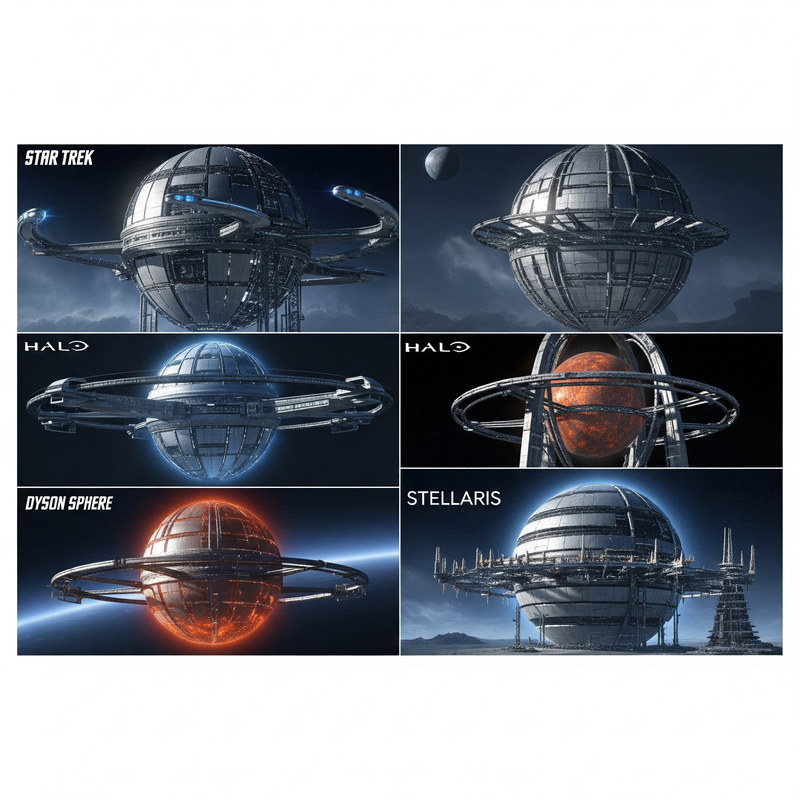
The awe-inspiring concept of the Dyson Sphere has deeply permeated science fiction, inspiring countless stories and games:
| Series/Game | Dyson Concept Used |
|---|---|
| Star Trek | Habitable Dyson Shell |
| Halo | Ringworld derivative (similar) |
| Stellaris (Game) | Buildable Dyson Sphere |
Science fiction often inspires science reality — and the Dyson Sphere is no exception, pushing the boundaries of scientific thought and human ambition.
Quick FAQ
Q: Is a Dyson Sphere realistic?
A: Yes, as a swarm of collectors, not a solid shell. It requires centuries of technological and societal progress, but doesn't violate known physics.
Q: Could aliens have built one?
A: Possibly. That’s what SETI researchers are actively looking for by analyzing strange stellar light fluctuations or heat signatures.
Q: Would it solve the energy crisis?
A: Absolutely. It would provide practically limitless energy, effectively ending energy scarcity and enabling unprecedented expansion and development.
Conclusion: Star Power for Civilization
The Dyson Sphere remains humanity’s most ambitious idea — a grand vision not just for survival, but for transcending our planetary limits and becoming a truly cosmic civilization. While purely theoretical in Dyson's original shell form, the concept of a Dyson Swarm is a serious engineering and astrophysics problem being studied and modeled today.
We are indeed far from building one. However, with rapid advancements in space robotics, artificial intelligence, asteroid mining, and fusion energy, we are already laying the conceptual and technological groundwork. The Dyson Sphere is a powerful reminder that humanity's ingenuity, fueled by our insatiable curiosity and ambition, might one day truly harness the power of a star.
Join the Cosmic Conversation!
Do you believe humanity will build a Dyson Sphere someday? What challenges do you think we'll face the most? Let’s discuss in the comments below!
If this article **blew your mind**, please **share it** with a friend who needs to see this vision of the future!
Subscribe to Science by Rao for more deep-dive explorations of our future in space and the universe's greatest mysteries.
References:
- Wright, J. T., Mullan, B., Sigurdsson, S., & Povich, M. S. (2014). The Ĝ Infrared Search for Extraterrestrial Civilizations with Large Energy Supplies. I. Background and Justification. *arXiv preprint arXiv:1408.1133*.