Are We Alone in the Universe? The Latest from the Search for Extraterrestrial Life
Published on: May 21, 2025 | Written by Science by Rao
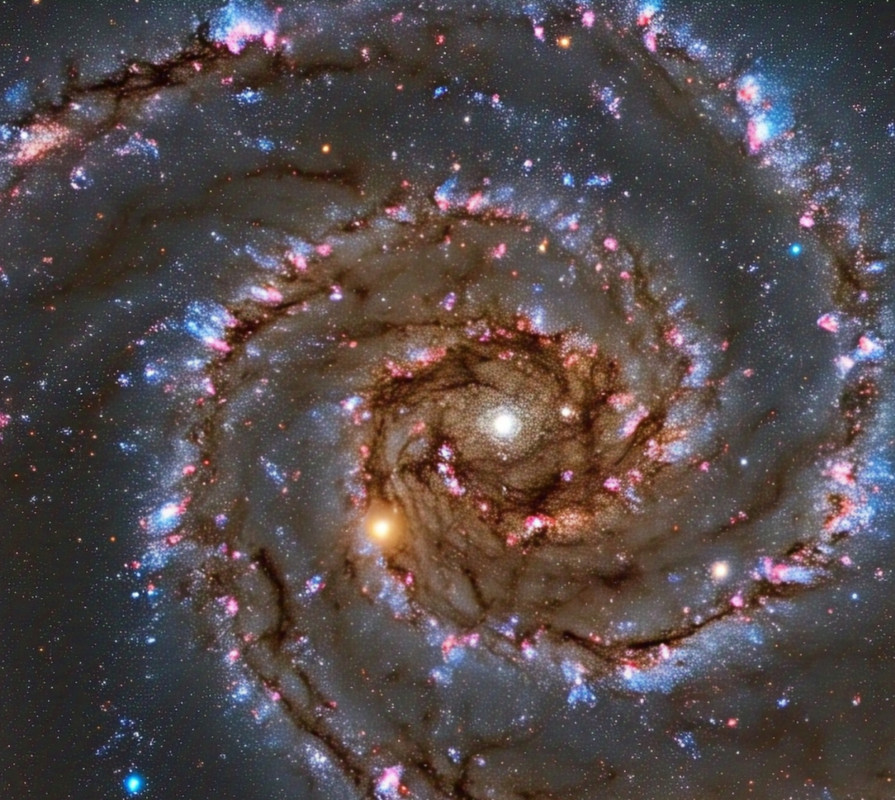
Image: An artistic depiction of an extraterrestrial entity observing Earth, fueling our ongoing quest for alien life.
Introduction: For centuries, humanity has gazed at the twinkling expanse of the night sky, gripped by one of the universe's most profound questions: Are we alone? This fundamental inquiry has spurred countless scientific endeavors, inspired endless works of fiction, and continues to drive groundbreaking research. Thanks to remarkable recent advances in space telescopes, radio astronomy, and AI-driven data analysis, we may be closer than ever to uncovering evidence of life beyond Earth. Let's explore the current state of the scientific search for extraterrestrial intelligence (SETI) and what the future might hold.
1. The Intensifying Quest for Alien Life
The search for life beyond our planet is a multi-faceted endeavor, combining various scientific disciplines and cutting-edge technologies:
-
Exoplanet Discoveries: Missions like NASA's now-retired Kepler Space Telescope and the Transiting Exoplanet Survey Satellite (**TESS**) have revolutionized our understanding of planetary systems beyond our own. They've discovered thousands of **exoplanets**, many of which reside in the "habitable zone" – the region around a star where conditions might allow for liquid water on a planet's surface. The upcoming **James Webb Space Telescope (JWST)** is taking this a step further, capable of analyzing the atmospheres of these distant worlds for potential biosignatures.
-
SETI Initiatives: The **Search for Extraterrestrial Intelligence (SETI)** continues its efforts to detect radio signals or other technological signs from advanced civilizations. While no definitive signals have been confirmed, the projects are growing in scope and technological sophistication, utilizing powerful radio telescopes and advanced data processing techniques.
-
Astrobiology and Biosignatures: Astrobiologists are actively researching what constitutes "life" in extreme environments on Earth to better understand where else it might thrive. They are looking for **biosignatures** – chemical indicators (like specific gases in an atmosphere) that suggest the presence of biological processes.

Image: A visualization of space telescopic data, representing the vast amounts of information we collect in our search for exoplanets.
2. How Close Are We to Finding Life?
While the definitive "smoking gun" of alien life remains elusive, researchers are making exciting progress by detecting tantalizing hints:
-
Organic Molecules and Water: Scientists are routinely detecting the building blocks of life – complex organic molecules and water vapor – in various extreme cosmic environments, from distant nebulae to the atmospheres of exoplanets.
-
Subsurface Oceans: Evidence strongly suggests that several icy moons in our own solar system, like Jupiter's **Europa** and Saturn's **Enceladus**, harbor vast subsurface oceans of liquid water. These oceans are heated by tidal forces and may contain hydrothermal vents, providing energy and chemical nutrients – conditions strikingly similar to where life might have originated on Earth.
-
Mars: Past and present missions to Mars continue to search for signs of past or present microbial life. While definitive proof is still lacking, discoveries of ancient riverbeds, subsurface ice, and tantalizing methane plumes keep the possibility alive.
-
Unusual Chemical Imbalances: In some exoplanet atmospheres, scientists are observing unusual chemical imbalances that, while not direct proof of life, are difficult to explain by non-biological processes alone. These are potential early indicators of biosignatures.
3. The Cosmic Probability Factor: Drake Equation and Fermi Paradox
To grapple with the sheer scale of the universe and the potential for life, scientists use conceptual tools like the **Drake Equation**.
-
The Drake Equation: Developed by astronomer Frank Drake, this formula attempts to estimate the number of communicative extraterrestrial civilizations in our Milky Way galaxy. While many of its variables are highly speculative, even conservative inputs often yield a result of dozens, hundreds, or even thousands of intelligent civilizations in our galaxy alone.
-
The Fermi Paradox: If the universe is so vast and the probability of life is high, then **"where is everybody?"** This question, posed by physicist Enrico Fermi, highlights the striking absence of observable evidence for alien civilizations, despite the high probabilities suggested by the Drake Equation. Possible explanations range from intelligent life being extremely rare, civilizations destroying themselves, or highly advanced civilizations simply being undetectable or choosing not to communicate.

Image: A data chart illustrating various cosmic probabilities and factors in the search for extraterrestrial life.
4. What Happens If We Find Them?
A definitive discovery of alien life—whether microbial or intelligent—would undoubtedly be the most profound scientific event in human history. Its implications would be immense and far-reaching:
-
Scientific Revolution: It would reshape our understanding of biology, chemistry, and planetary science, providing entirely new frameworks for studying life's origins and evolution.
-
Philosophical and Societal Impact: The discovery would fundamentally challenge our anthropocentric views, impacting religious beliefs, philosophical thought, and our place in the cosmos.
-
Ethical Questions: Critical ethical questions would arise. Should we attempt to contact an intelligent civilization? What are the risks and benefits of such an endeavor? What protocols would be necessary for first contact? The implications of finding even microbial life on other planets would require careful consideration regarding planetary protection and contamination.
-
Economic and Political Ramifications: Such a discovery could spark a new era of space exploration, drive massive investment in scientific research, and potentially shift geopolitical dynamics.
Conclusion: The Universe Continues to Whisper
The search for extraterrestrial life is no longer confined to the pages of science fiction; it is a vibrant and accelerating field of modern science. While the vastness of the cosmos and the challenges of detection are immense, the momentum of discovery is undeniable. From identifying potentially habitable exoplanets to probing for biosignatures in distant atmospheres and seeking signals from advanced civilizations, every new piece of data brings us closer to an answer. Are we alone? The universe is beginning to whisper its secrets, and humanity is listening intently, ready for the profound revelation that awaits.
Chances of Finding Life?
Many astrobiologists and astronomers are increasingly optimistic. Experts suggest there's a significant probability (some estimate 50–70%) that we will detect definitive signs of microbial or even intelligent life within the next 20–30 years, thanks to the capabilities of new telescopes like JWST and next-generation radio observatories, combined with advanced data analysis techniques by agencies like NASA, ESA, and private space ventures.
Explore More Science by Rao:
Follow and Connect with Science by Rao:
Stay updated by clicking the follow button on the sidebar!
Privacy Policy |
Disclaimer |
About the Author